
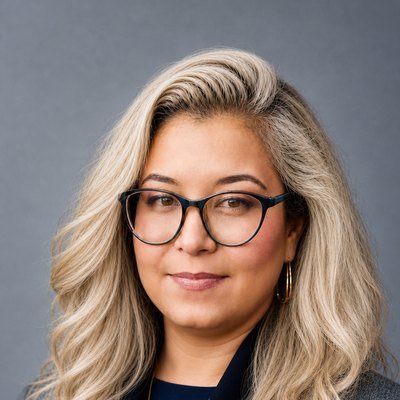
About Monica d’Errico-Franklin
Founder and Owner, Talk Time Academy
Monica d’Errico-Franklin is a speech-language pathologist, a mom, and the founder of Talk Time Academy, which she started in 2024 to make straight answers about early childhood easy to reach for any parent who wants one.
Why Monica Started Talk Time Academy
Talk Time Academy publishes what a clinician would tell a parent in an appointment, for anyone who goes looking for it.
Good answers to most questions about early childhood already exist. What families lack is a way to reach them, because the nearest specialist may be two hours away, a waiting list can run most of a year, and many families never get an appointment at all.
Parents used to leave my office relieved, and the only reason they believed me was that somebody qualified had said it to their face. Most families never get an appointment at all. Talk Time Academy is for the parents still waiting for one. – Monica d’Errico-Franklin
Monica’s Background and Clinical Experience
Monica d’Errico-Franklin, M.S., CCC-SLP, is a speech-language pathologist certified by the American Speech-Language-Hearing Association, and her work with children and families spans two very different settings.
Over a decade of it was in early childhood education, most of that as an assistant daycare director, before she trained clinically. Watching hundreds of children the same age move through the same stages, year after year, is what teaches how wide the ordinary range really is.
In her own practice since 2023, Monica works with children aged one to six alongside occupational therapists, physical therapists, behavioral specialists and pediatric physicians. Clinical work is the other half of it, and where a clinician learns to pick out the one child in a room who will not catch up on their own.
Monica is also raising a child of her own. Becoming a parent changed how she talks to other parents more than any part of her training did.
What CCC-SLP and ASHA Certification Mean
CCC-SLP stands for the Certificate of Clinical Competence in Speech-Language Pathology, awarded by the American Speech-Language-Hearing Association. Earning one takes a master’s degree, supervised clinical hours with real children, a national examination, and continuing education every year.
Monica holds the CCC-SLP, which means she answers to a national professional standard for anything carrying her name.
Everything Talk Time Academy Covers
Talk Time Academy answers the whole range of questions early childhood produces, from first words to mealtimes to a first meeting with a school district. All six areas sit in one library, birth to six years.
Quizzes and printables sit alongside the library, including a development check covering speech, motor, social and feeding across the whole age range. A parent community with courses is open.
Speech and Language
First words, late talking, and what actually helps at home.Milestones
What children are usually doing at each age, and how wide the ordinary range is.Behavior and Neurodivergence
Big feelings, regulation, and how autism, ADHD and sensory differences look early.Feeding and Sleep
Picky eating, mealtimes, night waking, and the routines that hold a day together.The Professional System
Evaluations, early intervention, IEPs, and being heard by the people in the room.Parent Wellbeing
The part nobody warns a parent about, and what the worrying does to them.
Four Principles Talk Time Academy Works From
- Every child is differentThe ordinary range is far wider than a milestone chart makes it look. Talk Time Academy writes to the whole range, not to the average.
- Parents know their child bestTalk Time Academy supplies the reasoning behind a recommendation. A parent who watches that child every day is better placed than anyone to apply it.
- Information, not instructionParenting approaches are contested more often than not. Talk Time Academy sets out what is known and leaves the choice with the family.
- Every topic covers neurodivergent childrenAutism, ADHD and sensory differences change how ordinary advice lands. Talk Time Academy handles them inside each topic rather than in a section of their own.
What Talk Time Academy Does Not Do
Monica does not provide therapy, diagnosis or clinical advice through Talk Time Academy. Her clinical practice is entirely separate and takes no referrals from the organization.
Talk Time Academy cannot replace a pediatrician, an early intervention team, or a speech-language pathologist who has met the child. Its purpose is to help a family arrive at those appointments already knowing what to ask.
Questions Parents Ask
What Does Talk Time Academy Include?
Written guides, quizzes and printables a parent can work through at home, and a community carrying courses. The community is open.
What Ages Does It Cover?
Birth to six years. Parents ask the most questions in those years, and early support makes the most difference there.
Is Talk Time Academy Only for Children Who Are Behind?
No. Most of the library answers ordinary questions from parents whose children are developing exactly as expected.
Can Monica Say Whether a Particular Child Needs an Evaluation?
No, because answering that honestly means meeting the child. A guide can show a parent what a professional looks at, which turns a vague worry into a clear question for someone who can answer it.
Where Does the Information Come From?
Monica’s clinical practice, the American Speech-Language-Hearing Association, the American Academy of Pediatrics, and CDC developmental milestone material. Where the sources disagree, a guide says so.
What Should a Parent Do Who Is Worried About Their Child?
Two calls are worth making. A pediatrician can run a developmental screening, and every state has an early intervention program that takes a parent’s own referral before a child turns three, with the evaluation carried out at public expense.
You noticed something. That was the hard part.
In fifteen minutes you will know which areas are steady and which one is worth a closer look. Clinically reviewed before publication.
Start free Free · About 15 minutes · Results in plain languagePublished August 2026 · Last reviewed August 2026 · Last updated August 2026 · Next review August 2027
Sources: American Speech-Language-Hearing Association; American Academy of Pediatrics; CDC Learn the Signs, Act Early.